

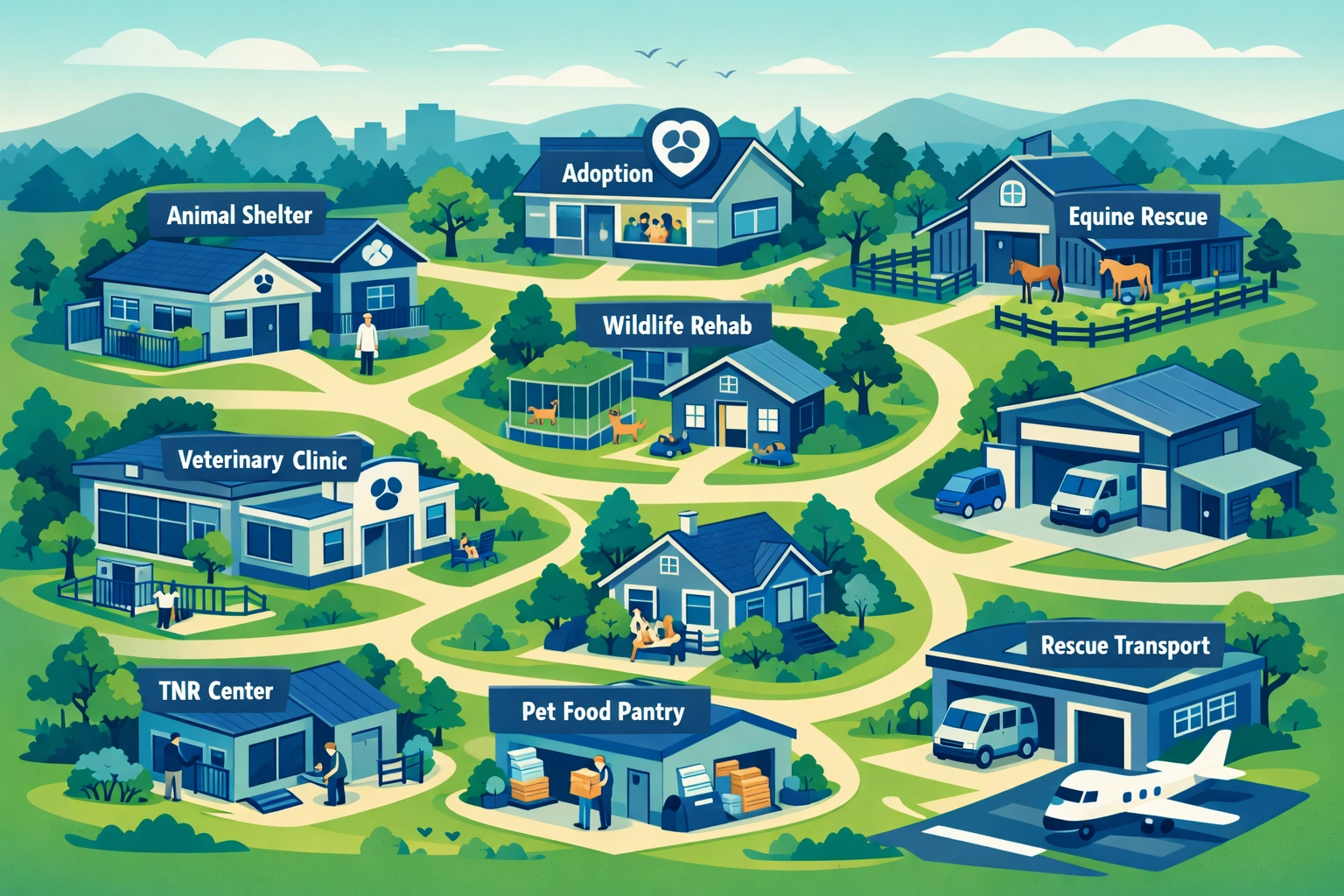
Across the United States, animal rescue organizations operate at the intersection of compassion, urgency, and constraint. Every day, they make high-stakes decisions: which animals to intake, how to evaluate them, and where to place them. These decisions directly impact not only the welfare of animals, but also long-term adoption success and return rates.
Yet despite the importance of these workflows, there is no universally enforced standard for how rescues should manage surrender intake or adoption screening. The result is a fragmented landscape — one where excellence exists, but is far from evenly distributed.
At Rescue Workflow, we set out to change that.
The Reality of Rescue Operations
Rescue organizations are overwhelmingly independent, decentralized nonprofits. Without a governing operational standard, processes vary dramatically across the country.
Industry-wide patterns reveal a clear divide:
Even among organizations with strong intentions, consistency is difficult to maintain. Staffing limitations, intake pressure, and urgency frequently override ideal process design.
What Does “Gold Standard” Actually Mean?
In the context of rescue operations, a Gold Standard process is not about bureaucracy — it's about informed decision-making and structured evaluation.
- Pre-surrender interview
- Medical & behavioral history
- Surrender diversion attempts
- Structured evaluation
- Capacity-aware placement
- Application & structured interview
- Reference checks
- Behavioral matchmaking
- Meet-and-greet process
- Post-adoption support
These practices are associated with lower return rates, better behavioral outcomes, and stronger long-term placements. But they are also time-intensive, operationally complex, and difficult to execute consistently without systems.
The Gap Between Ideal and Reality
Most rescues do not fall short due to lack of care — they fall short due to lack of operational support.
On the surrender side, intake forms are common — but structured interviews are far less consistent (40–60%), and surrender prevention efforts are often limited by time and staffing. At scale, this creates a system where:
The Core Problem: Process Is Not Systematized
Rescue organizations know what good looks like. The challenge is executing it reliably under pressure.
Traditional tools in the space focus on record keeping, basic workflow tracking, and data storage. But they stop short of answering the most important question:


Introducing the Gold Standard, Embedded
Rescue Workflow approaches this problem differently. Rather than treating best practices as documentation or training material, the platform encodes them directly into the workflow engine.
The Gold Standard is not a checklist — it is a guided pathway embedded into every critical decision point. At each fork in a workflow, the platform presents multiple possible actions, and one path is clearly identified as the recommended, best-practice route. That path reflects the operational patterns used by the top 15–30% of rescues nationwide.
Making Excellence the Default
The key innovation is simple but powerful:
From the moment a surrender request is opened, the platform reinforces this philosophy:
- Automated interview coordination replaces manual outreach
- Structured medical record collection replaces ad hoc follow-ups
- Capacity-aware decision-making replaces guesswork
- Guided intake sequencing replaces fragmented steps
Automation Without Mandates
Rescue work is unpredictable. No system can — or should — enforce rigid rules in every scenario. That's why the Gold Standard is designed as non-blocking and respectful of staff judgment. Every recommended action has an alternative. But the difference is clarity: the best path is clearly marked, the downstream impact is visible, and the cognitive burden is reduced.
A New Layer: Risk-Aware Capacity
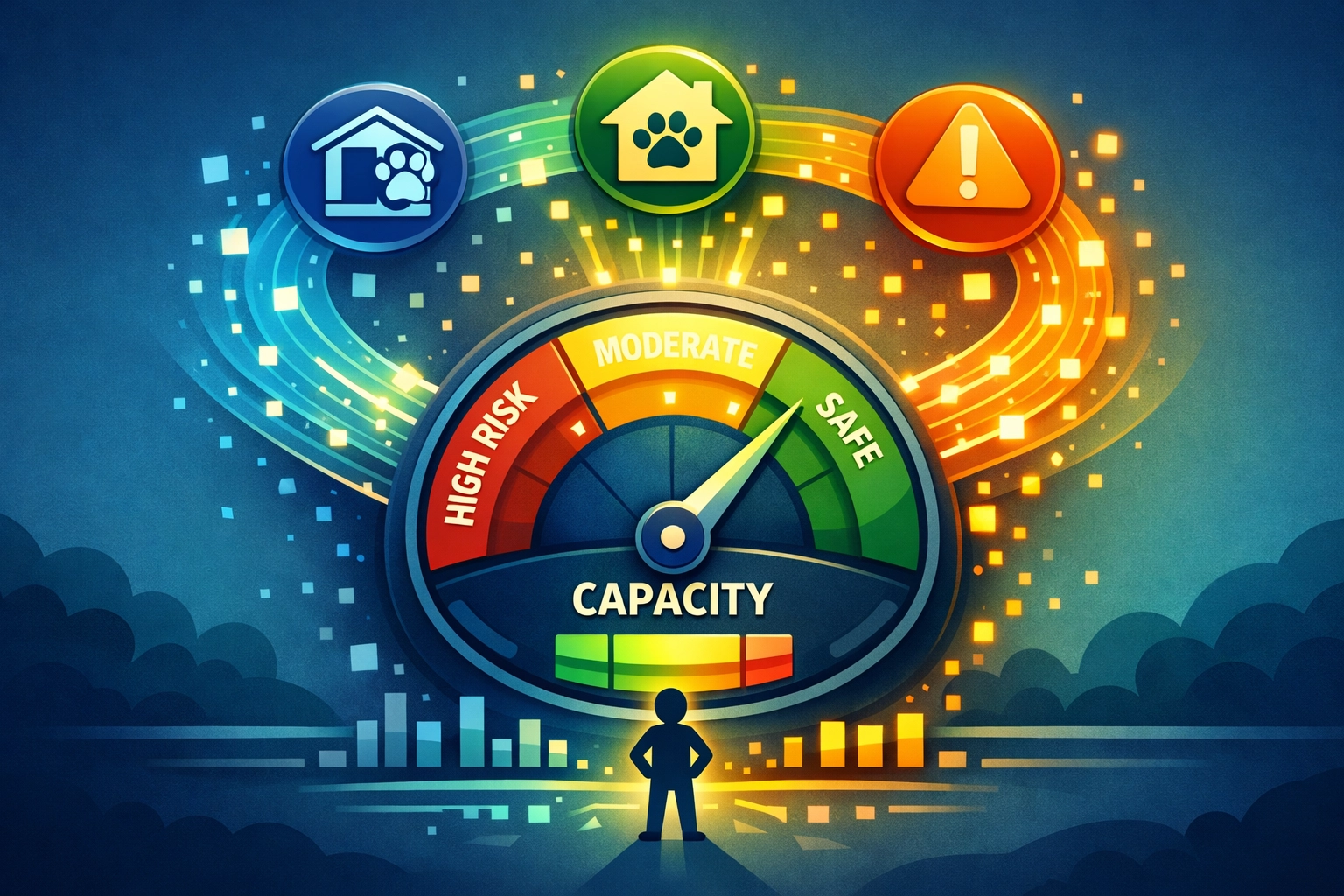
One of the most overlooked challenges in rescue intake is capacity planning. Most organizations rely on raw kennel counts and informal knowledge of foster availability. But this misses a critical variable: foster return risk.
“Do we have space?”
“Do we truly have space, given likely changes in foster availability?”
Rescue Workflow introduces risk-adjusted capacity — a concept typically only accessible to highly sophisticated organizations. By incorporating active foster placements, likelihood of return, and physical capacity constraints, staff gain a real-time, data-informed intake signal: when it is safe to proceed, when caution is warranted, and when intake should pause.
This transforms intake decisions from reactive to strategic.
Consistency Across the Entire Workflow
The Gold Standard is not limited to one process. It is consistently applied across surrender intake, transport coordination, capacity evaluation, and adoption and foster workflows. This creates something rare in rescue operations:
Democratizing Best-in-Class Rescue Operations
Historically, achieving Gold Standard processes required experienced staff, extensive training, and significant time investment. As a result, only a minority of rescues could consistently operate at that level.
Rescue Workflow changes that dynamic. By embedding best practices into the system itself, the platform reduces reliance on institutional knowledge, increases consistency across staff and volunteers, and elevates operational quality without increasing workload.
The Outcome: Better Decisions, Better Placements
At its core, the Gold Standard is not about process for its own sake. It is about outcomes:
Final Thought
Animal rescue will always involve uncertainty. No system can eliminate it. But better systems can reduce avoidable mistakes, surface better decisions, and support the people doing the work.
The gap between best practice and common practice has existed for years.
Rescue Workflow is designed to close it — one decision at a time.