

Much of the animal welfare software market assumes rescue means cats and dogs. That leaves reptile rescues, rabbit rescues, bird rescues, farm animal sanctuaries, wildlife-adjacent organizations, and mixed-species rescues trying to squeeze their work into fields that were never designed for them.
Taxonomy is not a cosmetic detail. It shapes intake, care planning, public listings, medical reminders, foster matching, adoption screening, and reporting. If the software starts with the wrong animal model, the workflow will keep fighting the rescue.
The pattern shows up early. Ask a rabbit rescue or a reptile rescue what it is like to set up a new animal-management tool, and the answer is usually the same: a breed dropdown built for dogs, a weight field with units that fit a Labrador but not a leopard gecko, and a vaccination-reminder system that flags every animal as overdue because it assumes rabies boosters apply universally. None of that is a small annoyance — it is the software actively working against the rescue's actual population.
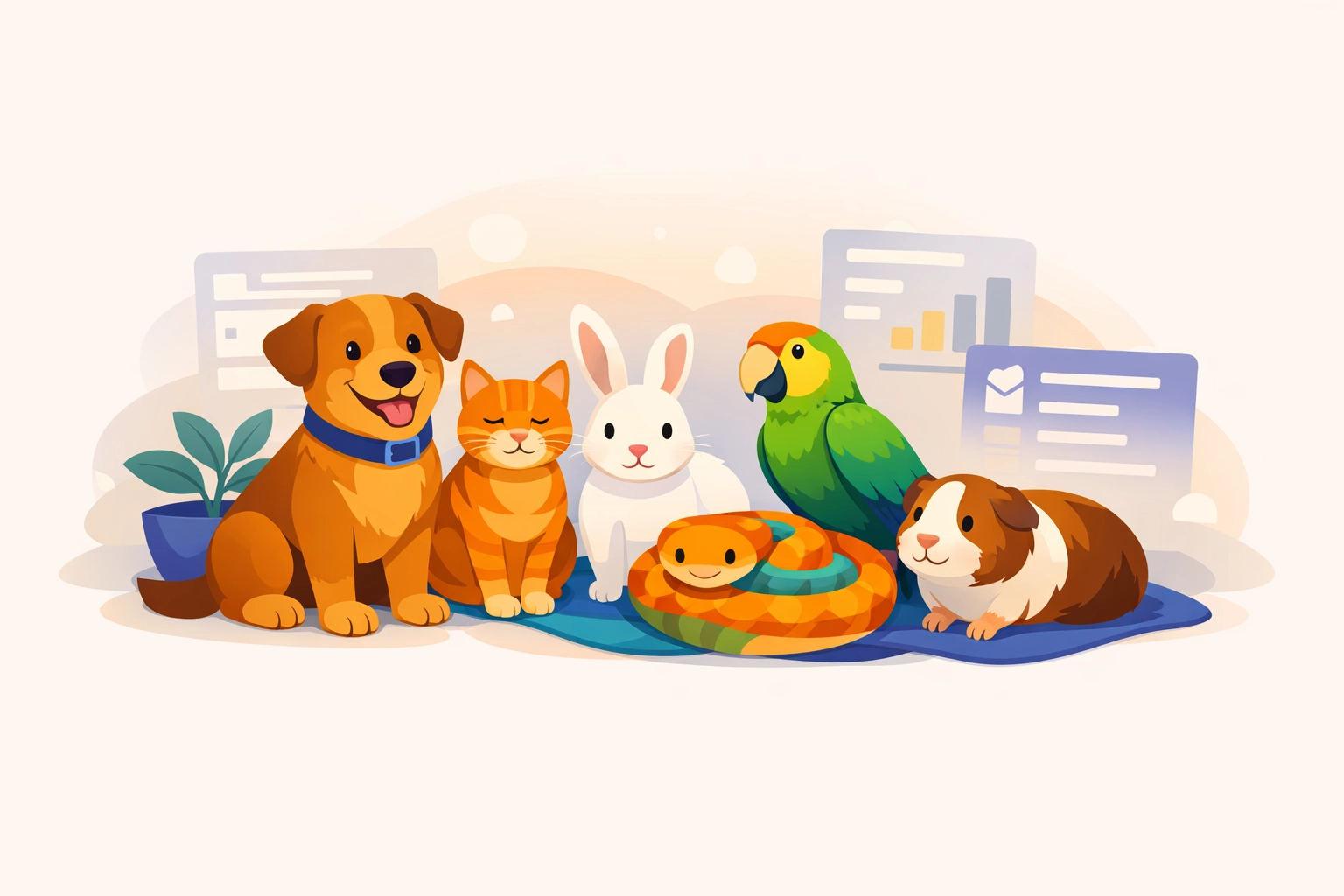
Why does taxonomy affect animal welfare?
Taxonomy affects welfare because it decides which questions the intake form asks, and a form that only asks dog-and-cat questions cannot capture what a different species needs. Species-aware records help teams ask the right questions. A rabbit intake may need housing, diet, and spay/neuter context. A snake surrender may need enclosure, heat, feeding, and handling history. A parrot may require noise, enrichment, and long-term placement considerations. Those details are not edge cases to the rescues that handle them every day.
The reverse is also true: when the software cannot represent a species properly, staff route around it. Reptile weight and shed history end up in a free-text notes field. Enclosure requirements get typed into an adoption bio instead of a structured field a search or reminder system can read. Nothing is technically lost, but nothing is usable either — a vet reminder engine cannot read a paragraph of prose to know a snake is overdue for a weight check.
What should an all-animal system support?
An all-animal system should support the species and common name for every animal, care workflows that branch by taxonomy, adopter-facing language that differs from internal records, and reporting that keeps category detail without manual rebuilding. In practice, that looks like:
- Species and common name are both useful: a ball python, bearded dragon, rabbit, parrot, goat, and guinea pig should not be forced into a dog/cat pattern.
- Care workflows can differ by taxonomy: quarantine, diet, enclosure, heat, vaccination, spay/neuter, and handling needs are not universal.
- Public listings should use words adopters understand while preserving accurate internal records for staff.
- Reporting should preserve category detail without making mixed-species rescues rebuild their data by hand.
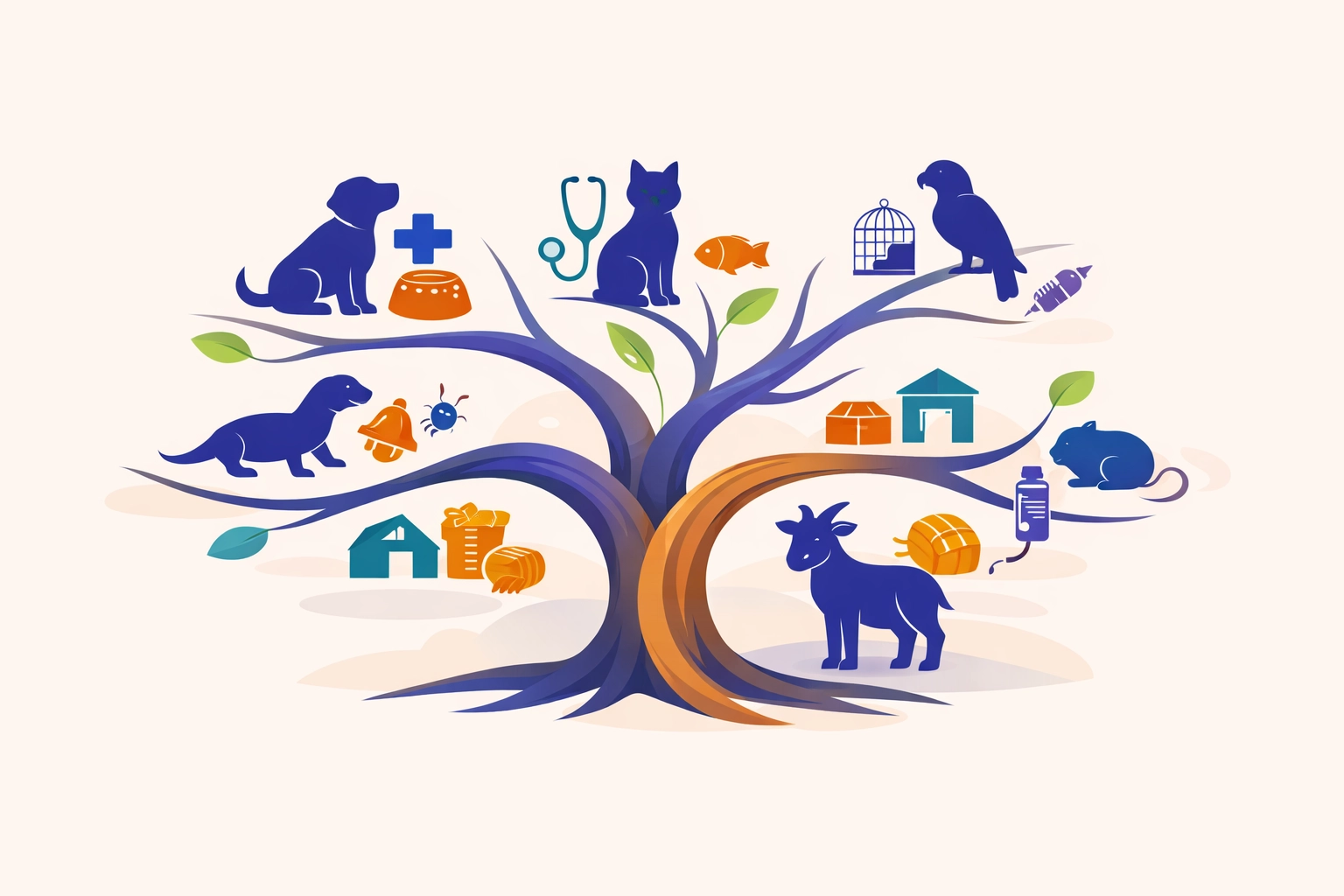
A worked example: a mixed-species intake week
Say a rescue takes in a stray rabbit on Monday, a surrendered bearded dragon on Wednesday, and two owner-surrendered kittens on Friday, all in the same week. A dog/cat-only system forces the rabbit and the bearded dragon into fields meant for a different animal: breed becomes a guess, weight units may not fit an exotic's typical range, and vaccination fields appear on a species that does not get those vaccines.
With an all-animal taxonomy, each animal is recorded under its real class, species, and breed. That record is where the species-specific details belong. For the rabbit, that means housing and spay/neuter timing. For the bearded dragon, it means enclosure temperature and feeding schedule, not a vaccine due-date that will never apply. The kittens follow the usual feline path. Staff still see all four animals in one list, so the daily view stays simple while the detail underneath stays accurate.
Mixed-species rescues need consistency and flexibility
A rescue may handle dogs, reptiles, rabbits, birds, and small mammals in the same year. Staff still need one coherent view of intake, medical status, foster placement, adoption readiness, and outcomes. The trick is to share the operational spine while adapting the care details to the animal.
That is what a good taxonomy enables: consistent workflows where consistency helps, and species-specific detail where welfare demands it.
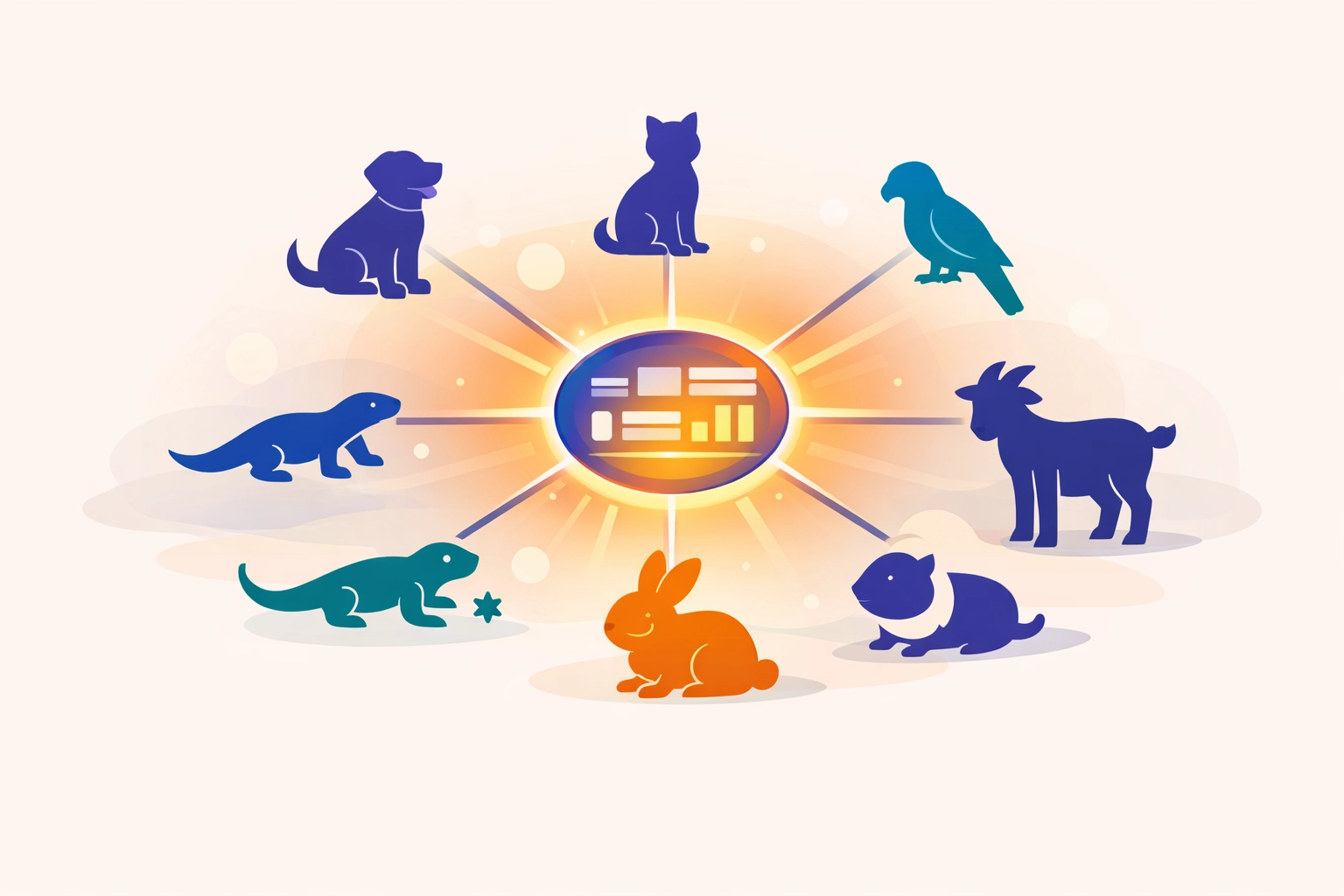
Limits and edge cases to plan for
No taxonomy anticipates every animal a rescue will ever take in. A species that arrives once every few years — a tortoise, a potbellied pig, a fostered farm animal — may not have a purpose-built set of fields yet. The practical answer is a general "other" category with flexible custom fields, so the record is still structured and searchable, even if it is not as tailored as the software's core species.
Another edge case is reclassification: an animal's taxonomy can be wrong at intake and get corrected later, for example when a mixed-breed guess is updated after a DNA test or a vet exam. The system should let staff correct that without losing the animal's history, rather than forcing a duplicate record.
A short checklist for evaluating taxonomy support
- Every species your rescue actually handles has a proper record, not a workaround in a notes field.
- Care reminders (vaccines, weigh-ins, enclosure checks) are species-appropriate, not blanket dog/cat defaults.
- Public listings read naturally for adopters while internal records keep precise taxonomy detail.
- A rarely-seen species still gets a structured, searchable record through a flexible "other" category.
- Reports can break down outcomes by species without a staff member rebuilding the data by hand.
The Bottom Line
Rescue work is broader than the software market often admits. An all-animal taxonomy is not a niche feature; it is a statement that every animal deserves records, workflows, and public visibility that fit their needs.