

Foster-based rescues are often more flexible than facility-based organizations, but they are also harder to coordinate. The animals are not in one building. Updates arrive by text, email, social media, and hallway conversations. One person may know a medication changed while another person is still reviewing an adoption application from old information.
Good operations for foster-based rescue come from making distributed work visible. The goal is not to add bureaucracy. The goal is to make sure the right person can see the right context before an animal, foster, or applicant falls through the cracks.
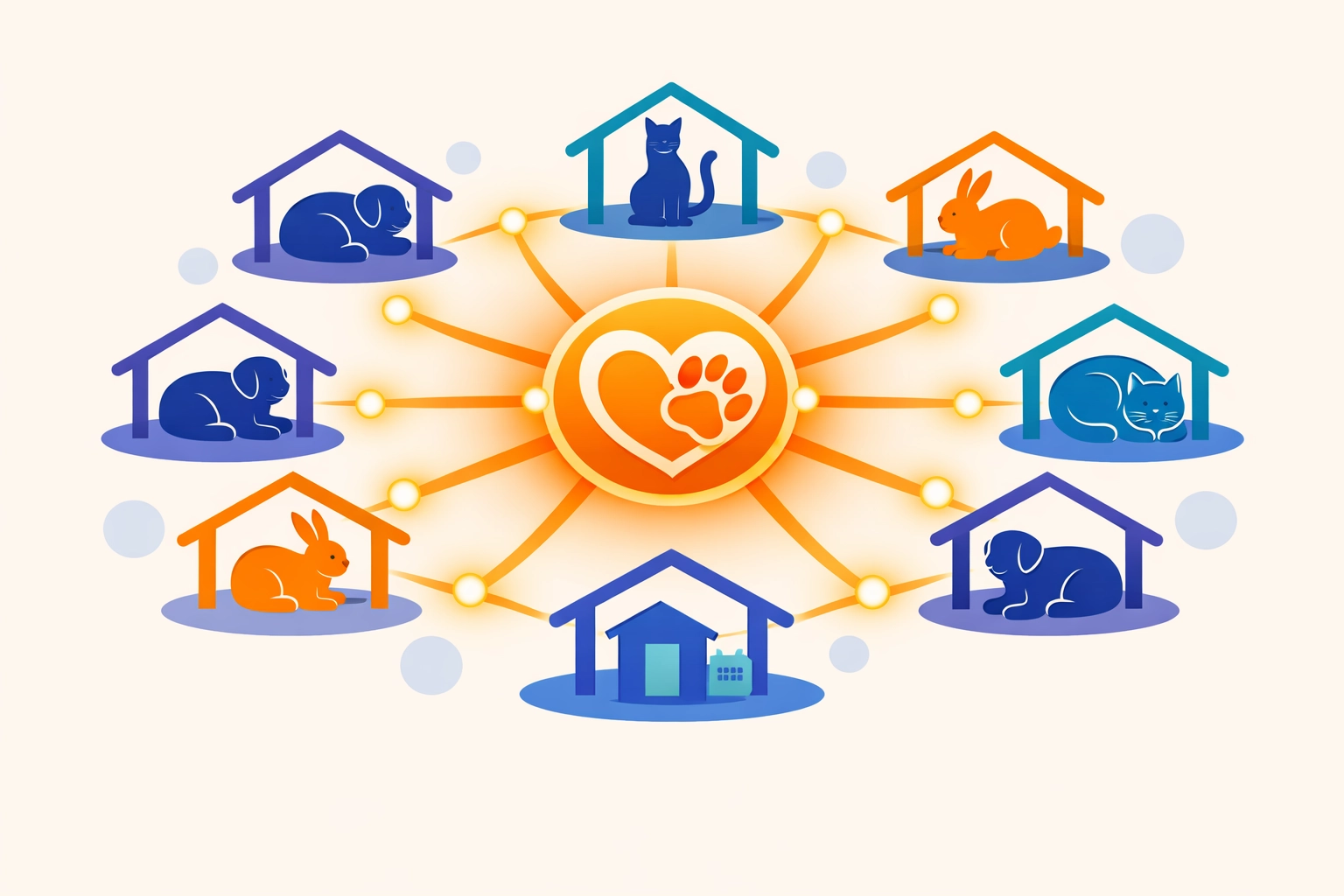
Why is capacity more than a number?
Capacity is more than a number because an open foster home is not automatically a safe placement for a given animal. A foster-based rescue may technically have open homes while still having no safe place for a particular animal. Capacity depends on species, size, medical needs, behavior, quarantine requirements, transport availability, and foster experience. A single total count cannot capture that.
Track capacity by care requirements. A rescue with three available fosters may still be full for bottle babies, reptiles, medical quarantine, or behavior-sensitive placements. That distinction protects animals and fosters from mismatches.
How should foster communication become a record?
Foster communication becomes a record when fosters can log updates directly into the animal's file instead of a text thread only one person reads. Fosters should not need a full staff account to help keep records current. A scoped foster portal lets them share feeding notes, behavior changes, photos, medication concerns, and return requests without exposing private applicant or financial information.
The value is not just convenience. It creates continuity. If a coordinator changes, the animal's care story remains with the animal instead of living in one person's phone.
A worked example: a foster update on a Tuesday
Say a foster reports on Tuesday that a cat stopped eating and seems lethargic. In a text-thread setup, that message lands with whichever coordinator happens to have their phone out, and it may or may not get relayed to the person managing that cat's adoption application, which is already in review with a family who has not been told anything is wrong.
With updates logged on the animal's record instead, the same report becomes visible to everyone who touches that cat's case: the medical lead sees a same-day flag, the application reviewer sees the note before moving the application forward, and the foster gets a response without having to follow up a second time. The animal's story stays in one place even if the original coordinator is off that day.

Operational Habits That Scale
- Keep foster placement, care instructions, medical needs, and return risk visible on the animal record.
- Give fosters a limited portal so updates do not disappear into text threads.
- Use task queues for vaccines, rechecks, applications, contracts, and transport instead of relying on memory.
- Track capacity by care type, not just total animal count.
- Preserve applicant, adopter, foster, and donor history on the same contact record when appropriate.
Why This Matters for Adoptions
Adoption decisions depend on foster insight. Behavior in a home, handling notes, enrichment needs, and species-specific care expectations can matter as much as the application itself. When foster updates are connected to adoption review, the team can make better placements without chasing context at the last minute.
Consider what happens without that connection. An applicant is approved for a dog based on a paper temperament questionnaire filled out weeks earlier, before the dog's foster reported that it startles around small children. If the adoption reviewer never sees that note, the match goes through anyway, and the mismatch surfaces only after the adoption — as a return, or worse, an incident in the new home. Connecting foster insight to review is not paperwork; it is the information a placement decision actually depends on.

Limits and edge cases to plan for
A foster portal only works if fosters actually use it, and adoption depends on how comfortable a given volunteer is with an app versus a phone call. Some rescues run both: portal-first for the fosters who want it, with a coordinator who still manually enters updates from the fosters who call instead. The record stays the source of truth either way, even when the input method differs.
Capacity tracking also has a ceiling. A rescue with two fosters and one species does not need granular care-type breakdowns; a spreadsheet-level system is proportional to a spreadsheet-sized operation. Structured capacity tracking earns its keep once a rescue is juggling enough fosters, species, and medical cases that a coordinator can no longer hold the whole picture in their head.
A short checklist for foster-based operations
- Every animal's foster placement is visible on its record, not just in a coordinator's memory.
- Fosters can log updates without a full staff account.
- Capacity is tracked by care type, not just an open-home count.
- Medical reminders reach the person actually caring for the animal, not just the office.
- Adoption review can see foster notes before a placement decision is finalized.
The Bottom Line
Foster-based rescue is not a lighter version of shelter management. It is a different operating model. The best systems support distributed care, limited-access collaboration, flexible capacity tracking, and connected decisions so that volunteer energy goes toward animals rather than administrative recovery work.