

Surrender and intake work is emotionally sensitive and operationally complex. A family may be making a painful decision. A rescue may be trying to protect capacity, verify facts, collect needed fees, and avoid accepting an animal without the medical or foster resources to care for them responsibly.
A good intake workflow should create clarity without removing compassion. It should help the rescue gather enough information to act responsibly, while keeping communication organized and transparent.
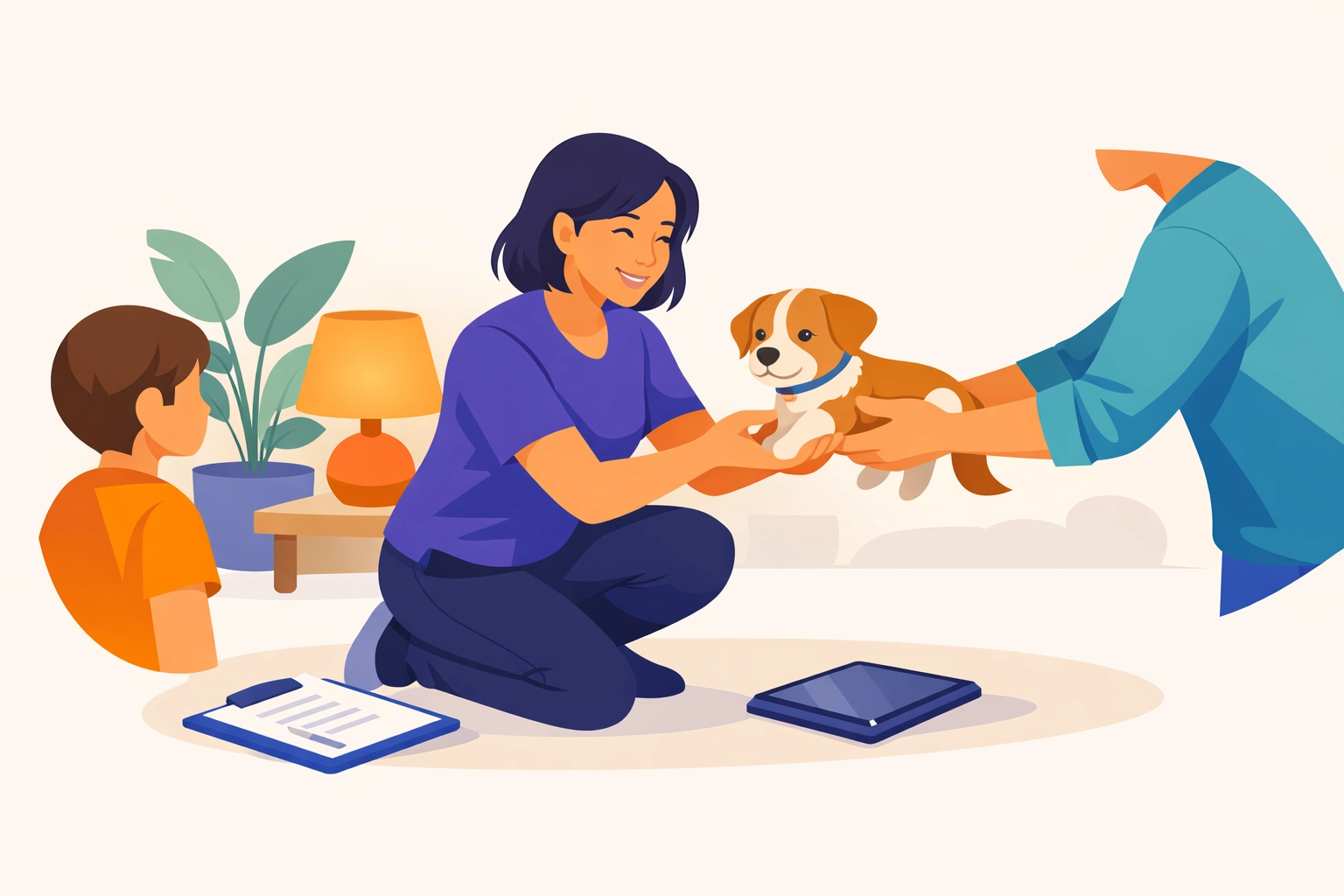
How does an intake workflow preserve context?
An intake workflow preserves context by keeping every step of a surrender tied to the same source record instead of scattered across a form, a calendar, and a staff member's inbox. The most common failure point is fragmentation. The surrender form is in one place, the appointment is on a calendar, the fee note is in a staff comment, the photos are in email, and the animal record is created later with only half the original information. Once that happens, the team loses context exactly when it matters most.
Treat intake as a connected workflow rather than a one-time form submission. Every step should point back to the same source record.
A worked example: a Friday surrender request
Say a family submits a surrender request Friday afternoon for a senior dog with a known heart condition. In a fragmented setup, the form sits in an inbox until Monday, the medical detail gets typed into a text message to whoever manages appointments, and by the time a staff member schedules the intake, nobody remembers whether a deposit was discussed.
In a connected workflow, the same submission opens a surrender record immediately: the medical note, the urgency, and the family's contact information are attached from the start. Capacity review happens against that one record, so the person confirming the appointment can see the heart condition before deciding which foster or facility slot fits. Nothing has to be re-typed, and nothing depends on a Friday message being remembered by Monday.
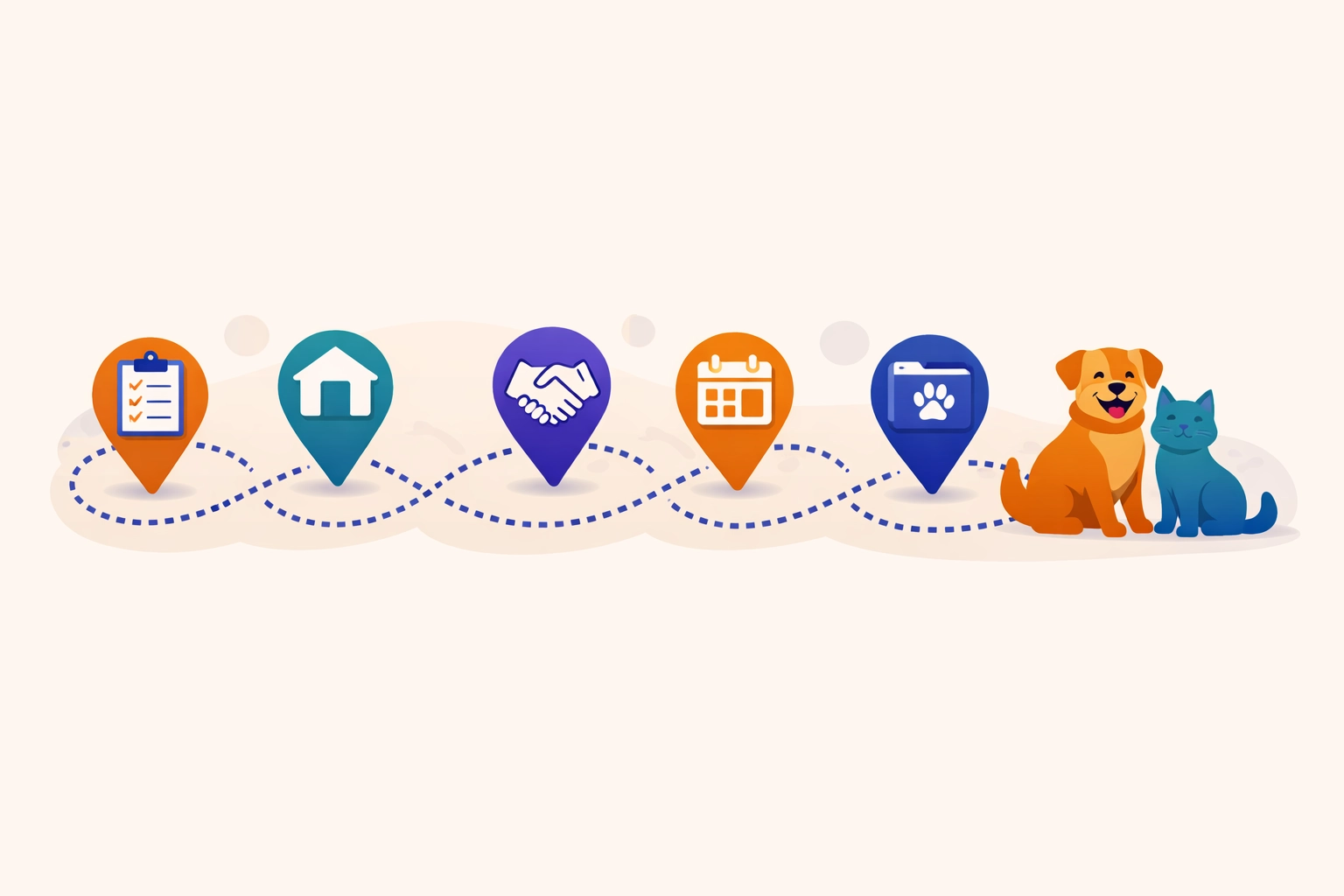
A Practical Surrender Flow
Request received
Capture owner contact, animal details, urgency, photos, known medical concerns, and reason for surrender.
Capacity reviewed
Compare the animal need against foster space, quarantine, medical capacity, and species expertise.
Terms confirmed
Document fees, deposits, appointment expectations, identity checks, and any rescue-specific terms.
Appointment or transfer arranged
Connect the calendar event to the surrender record so staff can see exactly what the meeting is for.
Animal record created
Carry forward details, photos, medical notes, and source history instead of starting over.
Watch for Time Zone and Scheduling Drift
Intake appointments and follow-up tasks need exact, local-time clarity. If a meeting is stored in UTC but displayed as local time without conversion, staff may see impossible appointment times or receive overdue reminders for events that never existed on the visible calendar. Every generated task should include a link to the source appointment or workflow record so the team can verify what happened.
This matters more than it sounds. A family told to arrive at 2pm should see 2pm reflected the same way on the rescue's calendar, the confirmation email, and any reminder task — not a version shifted by however many hours separate the server's clock from the rescue's own time zone. A drift bug here does not just create an inconvenience; it can mean a staff member waiting at an empty location while a family waits somewhere else at the time they were actually told.
How should fees and deposits be documented?
Fees and deposits should be documented as a visible status on the surrender record, not a note in someone's memory. Some rescues waive fees for medical hardship or urgent welfare reasons. Others require deposits to discourage no-shows. Either approach can be ethical when it is documented clearly. The system should show whether a fee was waived, collected, refunded, or attached to a particular surrender request.

Limits and edge cases in intake work
Not every surrender can wait for a scheduled appointment. An urgent welfare case — an injured stray, an owner in crisis — may need same-day intake outside the normal capacity review. A good workflow does not force urgency through the standard steps; it lets staff document the exception while still creating the same connected record, so the shortcut does not become an information gap later.
Capacity checks can also conflict with compassion in the moment. A rescue at capacity for a species may still choose to accept an animal in crisis and figure out placement after intake. That is a legitimate judgment call, not a workflow failure — but the record should show that the decision was made deliberately, with the capacity conflict visible, rather than silently overridden.
A short checklist for a connected intake process
- The surrender request, appointment, fee status, and resulting animal record all point back to one source.
- Medical and behavioral details entered at request time carry forward to the animal record automatically.
- Capacity is checked against real species, size, and medical need, not just a total headcount.
- Urgent cases have a documented path that skips scheduling delay without skipping the record.
- Fee waivers, deposits, and refunds are visible as a status, not a note someone has to remember.
The Bottom Line
Better intake is not about making surrender cold or transactional. It is about ensuring the rescue has the information, capacity, and follow-through needed to act in the animal's best interest. Connected intake workflows make humane decisions easier to defend and easier to complete.